How carbon parts fail
- Delamination. Plies separate between layers after impact or overload. Often invisible on the surface; it reduces compressive and bending strength and grows with fatigue cycles.
- Core crush and disbond. In sandwich panels the honeycomb or foam crushes under a point impact, or the skin peels off the core. The skin may spring back and look intact.
- Fiber fracture. Visible cracking or whitening; the load path is broken and the area must be cut out.
- Insert pull-out. Bonded bushes or brackets loosen, damaging the laminate around them.
- Heat damage. Resin above its Tg softens and can blister or delaminate, typical near brakes and exhausts.
Inspection methods compared
| Method | Finds | Limits | Typical cost |
|---|---|---|---|
| Tap test (coin / hammer) | Large near-surface delaminations and disbonds | Operator dependent; misses deep or small defects | Included in assessment |
| Conventional UT 2–5 MHz pulse-echo | Delaminations and voids through thickness at a point | Slow on large areas; needs couplant and access | $150 – $500+ report |
| Phased array (PAUT) / C-scan | Mapped delamination extent, depth and porosity over the area | Equipment cost; complex curvature needs fixturing | $500 – $2,000+ |
| Infrared thermography | Fast area screening for disbonds and water ingress | Less depth resolution; thick laminates hard | On request |
| CT / X-ray | Internal geometry, insert seating, cracks in 3D | Part size limited by the scanner; highest cost | Quoted per part |
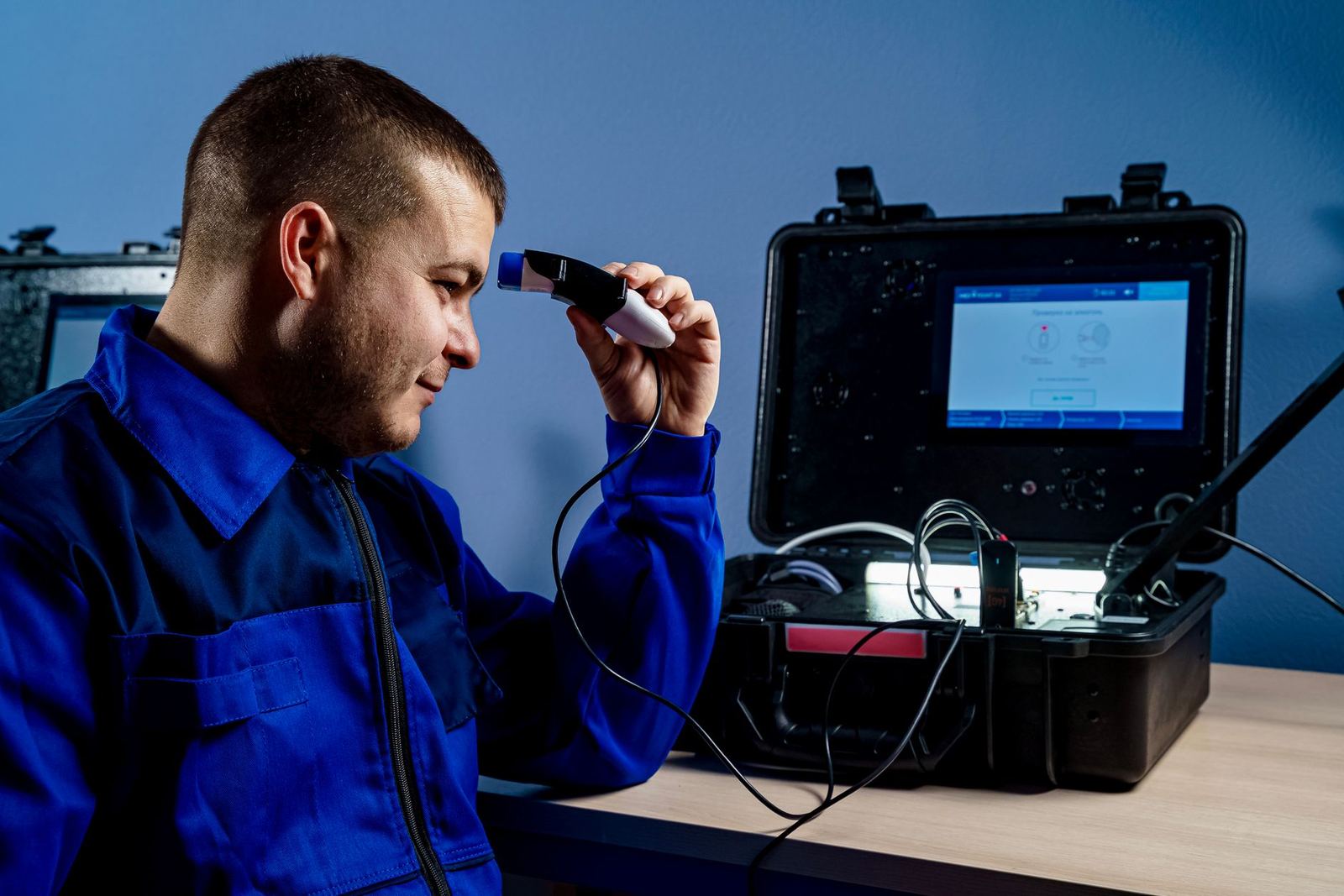
Structural repair protocol
NDT damage map
Ultrasonic mapping marks the full extent of delamination and core damage, usually well beyond the visible mark.
Scarf grind at 1:30–1:50
Damaged plies are removed with a tapered scarf, 30–50 mm of taper per millimetre of laminate thickness, so the repair plies overlap each original ply over a long bond line.
Core replacement
Crushed honeycomb or foam is cut out and replaced with matching core, splice-bonded with foaming adhesive.
Orientation-matched prepreg layup
Repair plies match the original ply orientation and count, plus one or two oversize cover plies, on film adhesive.
Autoclave or heat-blanket cure
Removable parts go back in the autoclave; in-situ repairs cure under vacuum with a controlled heat blanket and thermocouples.
Post-repair NDT sign-off
The repaired area is scanned again and reported before the part goes back on the car.
Safety structures are different. Survival cells, crash structures and homologated safety parts follow the manufacturer and the sanctioning body. Major damage to a homologated monocoque often means a factory repair or a write-off; see motorsport composite regulations.
Repair vs replace
| Damage | Typical repair cost | Replace instead when |
|---|---|---|
| NDT evaluation only | $150 – $500+ (PAUT / C-scan $500 – $2,000+) | Always inspect first after an impact |
| Minor aero delamination (wing, diffuser) | $500 – $1,500 | Repair cost passes ~50% of a new part from an existing mold |
| Structural aero rebuild (scarf + core + NDT) | $2,000 – $6,000+ | The mold exists and a new part is cheaper and faster |
| Survival cell / monocoque skin, localised | $5,000 – $15,000+ | Damage reaches hardpoints or the homologated structure |
Damaged part? Send photos and the impact description for an assessment.
Request NDT & repair