The tool decides the surface finish, the dimensional accuracy and, at low volume, most of the price. Here is what each pattern and mold option costs, survives and suits.
Pattern materials
Pattern material
Density / character
Use
Notes
EB700-class epoxy tooling board
~0.7 g/cm³, fine grain, machines to a sealed gloss
Master patterns for carbon and glass molds
Dimensionally stable to tooling-prepreg cure temperatures when sealed; the motorsport default
High-density PU foam board
0.3–0.7 g/cm³, cheaper, coarser
Large patterns, concept models, low-temp molds
Needs a sealed surface coat; less stable at elevated temperature
Direct-machined aluminum
No pattern step
Production tools for high cycle counts
Pattern cost replaced by billet and machine time
Mold types
Mold
Cure capability
Cycle life
Cost factor vs carbon tool
High-temp epoxy / glass
VARTM and low-cycle OOA; not pressure-rated
20–50 pulls
~0.65×
Carbon tooling prepreg (XT135-type)
Autoclave 120–180 °C, 3–7 bar; CTE matched to the part
Hundreds of cycles with care
1.0× (baseline)
Direct CNC aluminum
Autoclave or press; thermal mismatch above ~1 m
Thousands of cycles
~1.85–2.4×, no pattern
Invar (Fe-Ni 36)
Autoclave, near-zero CTE
Thousands of cycles
$30k–$100k+ on large aero shells
Why CTE matching matters
A carbon laminate expands only about 0–2 µm/m·K in plane; aluminum expands about 23 µm/m·K. At a 120 °C cure the aluminum tool grows roughly 2.3 mm per metre more than the part, and the part locks in at the cure-temperature size of the tool. On a short brake duct that is noise; on a 1.8 m splitter it is a part that no longer meets its mounting holes. Carbon prepreg tools, laid up off the pattern, expand with the part. Invar does the same in metal, at a metal price.
Tooling prepreg is not part prepreg. Tools are laid up in purpose-made tooling prepregs with a low-temperature initial cure on the pattern, then a free-standing post-cure to a service temperature above the part cure. That sequence protects the pattern and gives the tool its temperature rating.
Split molds, alignment and backing
Split molds. Undercuts, return flanges and closed sections need a mold in two or more pieces. Each split adds flanges, fasteners, sealing and machining time: the estimator applies ×1.85 for split molds and ×2.25 for hollow bladder tools.
Alignment. Mold sections locate on hardened steel dowels or Rosán-type threaded inserts bonded into the flanges, so the part closes the same way every cycle.
Egg-crate backing. Autoclave tools sit on a welded or bonded egg-crate frame that holds shape under 3–7 bar and lets heat reach the tool face evenly.
Trim fixtures. A trim nest locates the cured part for 5-axis trimming and drilling, so every part in the batch has the same edges and holes.
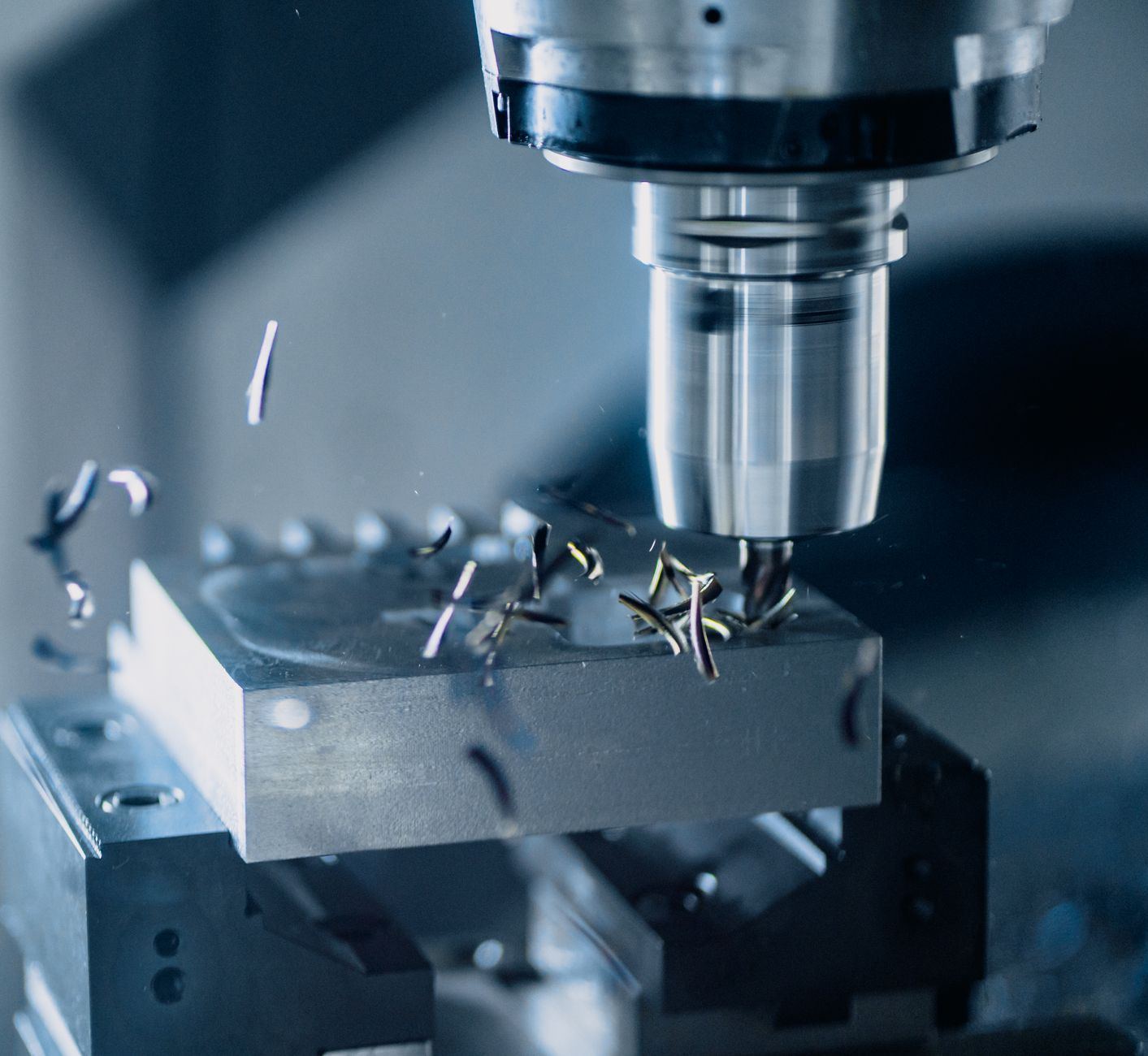
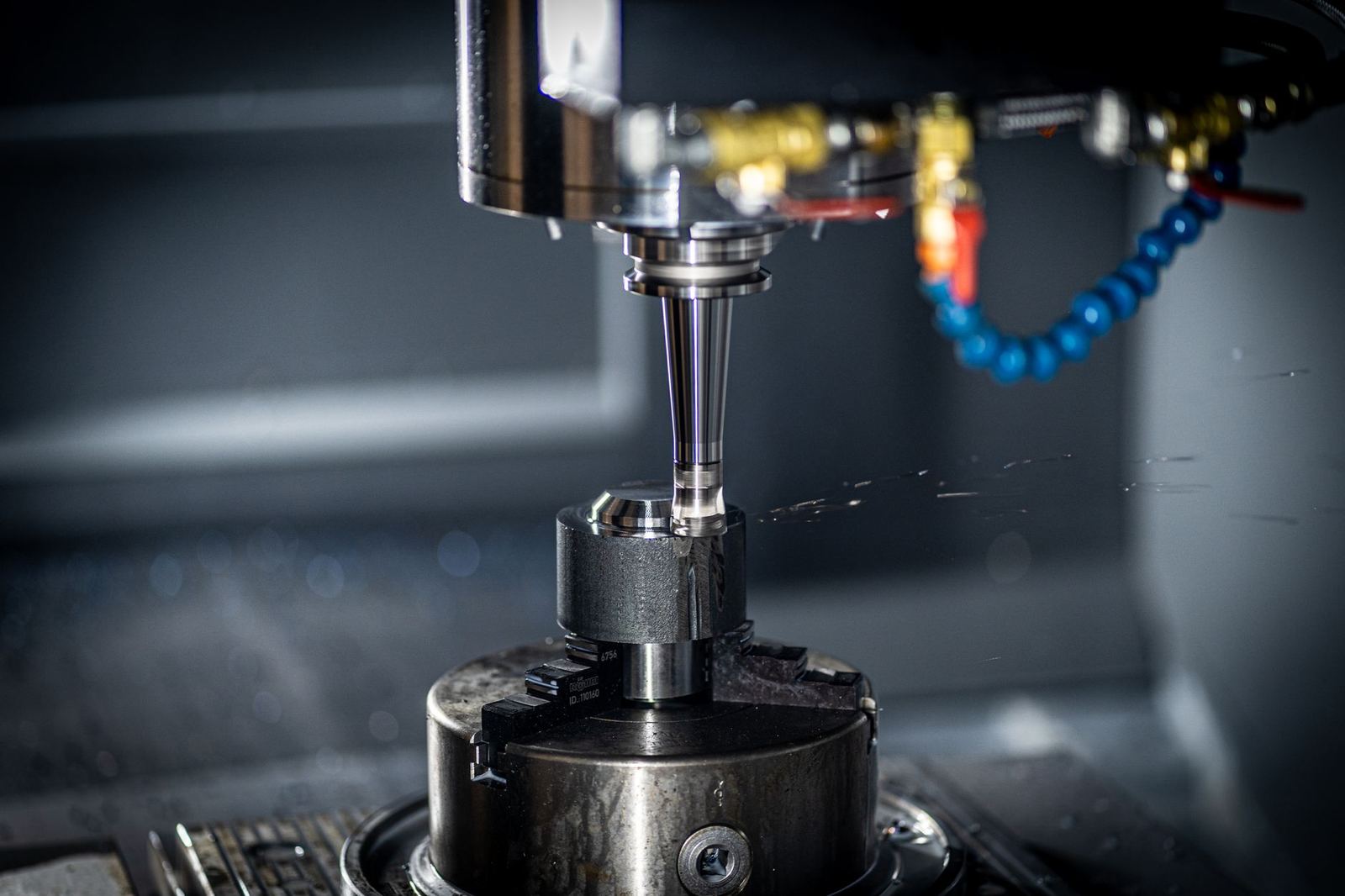
Trim fixtures and aluminum tools come off the same 5-axis machines as patterns.
Tooling cost matrix (USD)
Scope
Small (ducts, mirror caps, endplates)
Medium (wing element, dash, hatch)
Large / complex (nose, splitter, sidepod, door, hood)
CNC master pattern
$500 – $2,000
$2,000 – $6,000
$6,000 – $20,000+
Mold fabrication
$1,500 – $4,000
$4,000 – $15,000
$15,000 – $50,000+
Total tooling package
$2,000 – $6,000
$6,000 – $20,000
$20,000 – $70,000+
Pattern + mold + trim fixture. Direct-machined aluminum or Invar for ultra-precision or high-cycle runs: $15,000–$30,000+, past $100,000 on large aero shells.
Price your pattern, mold and fixture with your area and geometry.